
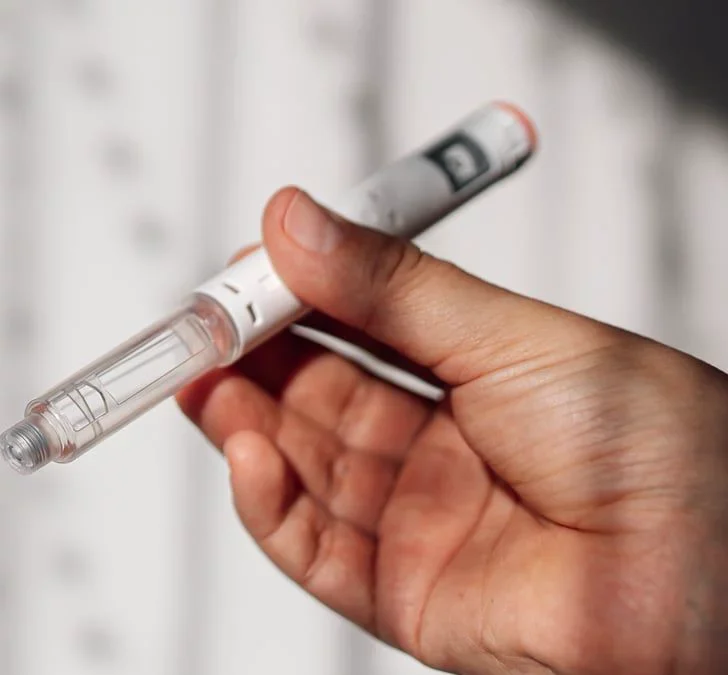
In the era of modern aesthetic medicine, few advancements have generated as much attention as GLP-1 medications. Once reserved for metabolic health, treatments like Ozempic, Wegovy, and Mounjaro are now redefining body transformation—delivering significant, and often rapid, weight loss.
But while the body evolves, the face often tells a more complex story.
The New Aesthetic Reality
Weight loss has always been associated with improved health and confidence. However, with GLP-1 medications accelerating fat reduction, we are seeing a shift in how the face responds.
Facial fat is not excess—it is structure. It supports youthful contours, soft transitions, and balance. When this volume diminishes quickly, the result is not simply a slimmer face—it can be a face that appears:
- More hollow
- Less supported
- Visibly fatigued or aged
This phenomenon is often referred to as “GLP-1 face,” but in reality, it is rapid volume depletion.
Understanding Volume vs. Aging
Traditional aging is gradual. It involves:
- Collagen loss
- Skin laxity
- Subtle shifts in fat pads over time
GLP-1-related changes, however, are different. They compress years of volume loss into a much shorter window. The midface flattens, the temples may hollow, and natural contours soften in a way that can feel unexpected.
This is not a flaw—it is a physiological response to rapid fat loss.
Beyond the Face: Skin Quality & Tissue Integrity
Another layer often overlooked is skin quality.
As the underlying fat diminishes, the skin must adapt. Without adequate collagen support, patients may notice:
- Increased laxity
- Crepey texture
- Reduced elasticity
- A loss of radiance
This is where aesthetic medicine becomes less about correction—and more about strategic restoration.
A Refined Approach to Treatment
The most sophisticated outcomes are not achieved by simply “adding filler.” Instead, they require a nuanced, layered approach that respects both structure and skin.
1. Structural Rebalancing: Carefully placed dermal filler can restore foundational support—particularly in areas like the midface and temples. The goal is not volume for the sake of fullness, but architectural integrity.
2. Collagen Stimulation: Energy-based treatments and plasma technology help rebuild what weight loss cannot preserve: skin strength and resilience.
3. Biostimulatory Treatments: These encourage the body’s own collagen production over time, offering a gradual, natural refinement rather than an immediate, overfilled result.
The Importance of Timing
One of the most overlooked opportunities in GLP-1 journeys is early intervention. When aesthetic planning begins alongside weight loss:
- Skin adapts more gracefully
- Volume loss can be anticipated and balanced
- Results appear seamless, not reactive
True luxury in aesthetic medicine lies in proactive care, not correction.